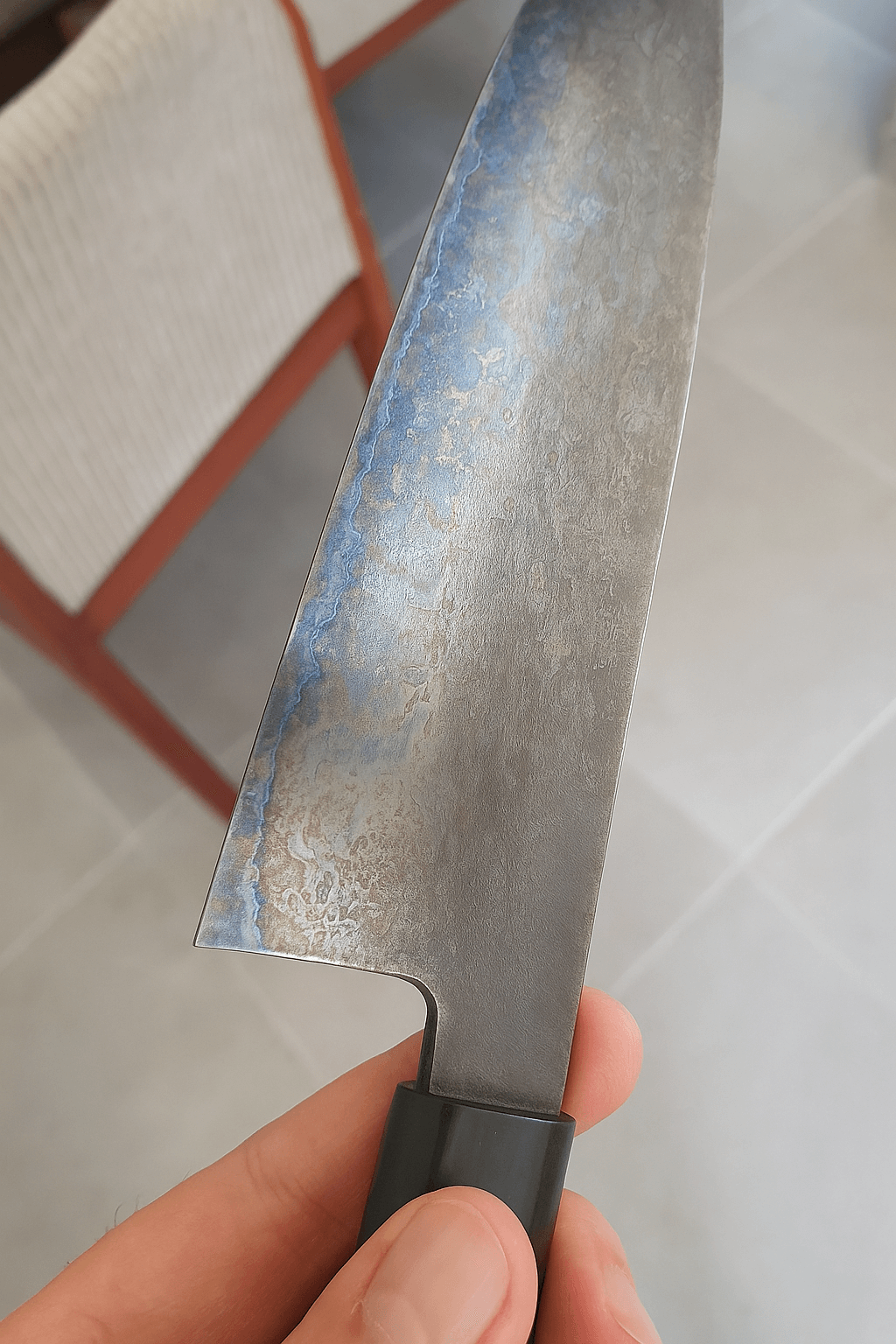
What is patina on a Japanese knife and why can it be good?
1. What is patina and why does it appear?
Patina is a thin layer of oxidation that appears naturally on carbon steel blades, such as Aogami or Shirogami. Unlike rust ( which damages ), patina protects the steel. from further oxidation, acting as a barrier that stabilizes the surface. It appears with use, especially if you cut acidic foods like tomatoes, onions, or citrus fruits.
🔎 Fun fact: The patina usually begins as a golden color, turning blue, purple, and finally dark gray.
2. Is patina good or bad?
Many hobbyists are concerned when they see their knife " tarnish," but patina is not dirt or deterioration: it is a sign that the steel is reacting as it should.
✔️ The good: It protects against corrosion, gives the knife character, and is completely natural. ✖️ The bad: if you don't clean the blade well, rust ( brown or red) may appear, which is harmful and should be removed.
3. Which knives develop patina?
Mainly Japanese carbon steel knives, such as:
- Shirogami ( White Steel ): Very pure, sensitive, develops patina quickly.
- Aogami ( Blue Steel ): Somewhat more resistant, it contains a little chromium.
- SKS93 / SUJ2: Also carbonaceous, with different sensitivity.
Stainless steel or " powder steel " does not develop patina or does so minimally.
4. Can I speed up the formation of patina?
Yes. Some chefs apply a " forced patina " to protect their blade from day one. How?
🥄 With coffee: Dip the leaf in cold coffee ( without touching the handle) and let it sit for a few hours. 🟡 With mustard: Apply mustard ( preferably with vinegar) with a cotton swab. 🥑 With food: onion, avocado or even mayonnaise help create unique patterns.
5. How to care for a patinated knife
Once your knife has developed patina, here are the key care steps:
- Always clean by hand, with warm water and without harsh soap.
- Dry immediately after use.
- Apply a drop of maintenance oil if you are not going to use it for a few days.
- Store it wrapped in paper or a bag that does n't retain moisture.
🧽 Does rust appear? Use a soft abrasive sponge or a special knife eraser. Avoid sandpaper, which can damage the Damascus pattern or the Kuro- Uchi finish.
Closing and tips
Understanding patina is key to appreciating a good Japanese carbon steel knife. Far from being a flaw, it's part of the blade 's soul. Each patina tells a story: yours, your ingredients, your recipes.
💡 Do you have a knife with patina? Share it with us on social media using the hashtag #MyJapaneseKnife and visit our page to see all the top Japanese knives on the market.